Leases, the 2026 Lineup, and How the Money Actually Moves
A working reference for the floor and the F&I box — every lease term broken down, the complete 2026 Mercedes-Benz model range, and how financing, rates, and dealer profit centers fit together.
How a Lease Actually Works
A lease is not a loan on the whole car — it's a loan on the car's depreciation. The customer pays for the portion of the vehicle's value they use up during the term, plus a financing charge, plus tax and fees. Understanding that one idea makes every other lease term make sense.
The core idea
When a bank finances a purchase, the customer eventually owns 100% of the car's value. When a bank leases a car, it's really predicting two numbers: what the car is worth today (capitalized cost), and what it'll be worth when the lease ends (residual value). The gap between those two numbers — the depreciation — is what the customer pays for, spread over the term. On top of that depreciation, the bank charges rent (interest) for the privilege, expressed through the money factor instead of an APR.
Monthly Finance Charge = (Capitalized Cost + Residual Value) × Money Factor
Base Payment = Monthly Depreciation + Monthly Finance Charge
Total Payment = Base Payment + (Base Payment × Local Tax Rate)
Depreciation: ($47,000 − $29,730) ÷ 36 = $479.72/mo
Finance charge: ($47,000 + $29,730) × .00125 = $95.91/mo
Base payment: $575.63/mo before tax
Where each number comes from
Residual value and the base money factor are set by the manufacturer's captive lender — for Mercedes, that's Mercedes-Benz Financial Services (MBFS) — and are not negotiable line items. Capitalized cost is negotiable: it's built from the selling price, minus any dealer contribution, rebates, or trade equity, plus anything the customer chooses to roll in. The only other lever a dealer legally controls is markup on the money factor above MBFS's buy rate — more on that in the F&I section.
Every Lease Component, Explained
The full vocabulary a customer will hear on a lease worksheet, and what each term actually controls.
The agreed-upon price of the vehicle at lease inception, plus any rolled-in fees. This is the number to negotiate — never negotiate the monthly payment directly.
Gross cap cost is selling price + fees before reductions. Net cap cost is gross minus any cap cost reduction (down payment, rebate, trade equity). Net cap cost is what actually depreciates.
Any upfront payment that lowers the cap cost — functions like a down payment on a lease. Lowers the monthly payment, but is not refundable if the car is totaled or stolen, even with GAP.
The projected value of the car at lease-end, expressed as a % of MSRP. Set by MBFS by model, term, and mileage — fixed, not negotiable. Higher residual = lower payment.
The lease's interest rate, expressed as a small decimal (e.g., .00125) instead of a percentage. Multiply by 2,400 to convert to an approximate APR.
MBFS issues a base ("buy") money factor by credit tier. Dealers may mark it up before quoting the customer — the spread is dealer profit, same mechanism as loan rate reserve.
The lease term for the monthly finance charge — the interest-equivalent portion of the payment, calculated off (cap cost + residual) × money factor.
A lender fee charged at lease inception (commonly $795–$995 with MBFS) covering the cost of setting up the lease and the GAP coverage built into it. Non-negotiable, usually rolled into cap cost.
Charged at lease-end if the customer returns the car instead of buying it out — covers MBFS's cost to prep and resell it. Typically $350–$595. Often waived if the customer leases or buys another Mercedes.
Standard tiers are 10,000 / 12,000 / 15,000 miles per year. Lower annual mileage raises the residual (and lowers payment); overage is billed at lease-end, typically $0.20–$0.30/mile with MBFS.
A Mercedes-specific lever: customers can prepay multiple refundable security deposits (often up to 9–10) to buy the money factor down, roughly 0.00007–0.00010 per deposit. Fully refunded at lease-end if the vehicle is undamaged and all payments were on time.
Built into virtually every MBFS lease via the acquisition fee — covers the gap between insurance payout and remaining lease balance if the car is totaled. Unlike loans, this usually doesn't need to be sold separately on a lease.
Lease-end inspection standard. Damage beyond "normal wear" (dents, tears, cracked glass, mismatched tires) is billed separately from mileage overage.
Customer pays the entire lease amount upfront in one lump sum. Because the payment is based on the discounted present value, the effective money factor is typically lower than a monthly-pay lease.
The standard structure — the customer simply walks away at lease-end (subject to mileage/wear charges) with no obligation tied to the car's actual resale value. Virtually all consumer MBFS leases are closed-end.
Lease-End & Early-Exit Options
What happens when the term is up — or when the customer wants out early.
At scheduled lease-end
- Return the vehicle — subject to the disposition fee, mileage overage, and any excess wear charges.
- Buy the vehicle — purchase at the pre-set residual value, either cash or financed as a new retail loan through MBFS or elsewhere.
- Lease or buy another Mercedes-Benz — the most common path; often waives the disposition fee and can roll positive lease-end equity into the new deal.
Ending a lease early
Customers are not "stuck," but exiting early isn't free — the remaining depreciation and finance charges are still owed one way or another. Options include a lease pull-ahead (MBFS periodically offers programs waiving remaining payments to get customers into a new lease), trading the lease's equity (if the car's market value exceeds the lease payoff) toward a new deal, or a straight lease buyout followed by private resale.
Lease vs. Finance — Framing It for a Customer
| Factor | Lease | Finance (Loan) |
|---|---|---|
| What you're paying for | Depreciation + rent charge on the portion used | The full purchase price + interest |
| Monthly payment | Typically lower | Typically higher |
| Ownership at term-end | None, unless buyout exercised | Full ownership, no payment |
| Mileage restrictions | Yes — overage fees apply | None |
| Customization / modification | Restricted | Unrestricted |
| Best fit | Customers who want a new car every 2–3 years, drive predictable mileage, and prefer lower monthly costs | Customers who drive high mileage, want to build equity, or plan to keep the vehicle long-term |
Mercedes-Benz Naming Convention
The letter identifies the body style / class. The number that follows historically approximated engine displacement; today it signals output/trim tier rather than literal displacement (a "300" isn't a 3.0L anymore in most cases). EQ-prefixed names are the all-electric line, mirrored roughly to their combustion counterparts.
Full 2026 Model Lineup
Organized smallest-to-largest within body type. Starting MSRPs are base trim before destination charge and are subject to change — always confirm current pricing against the live configurator or DMS before quoting a customer.
Entry / Compact SUVs
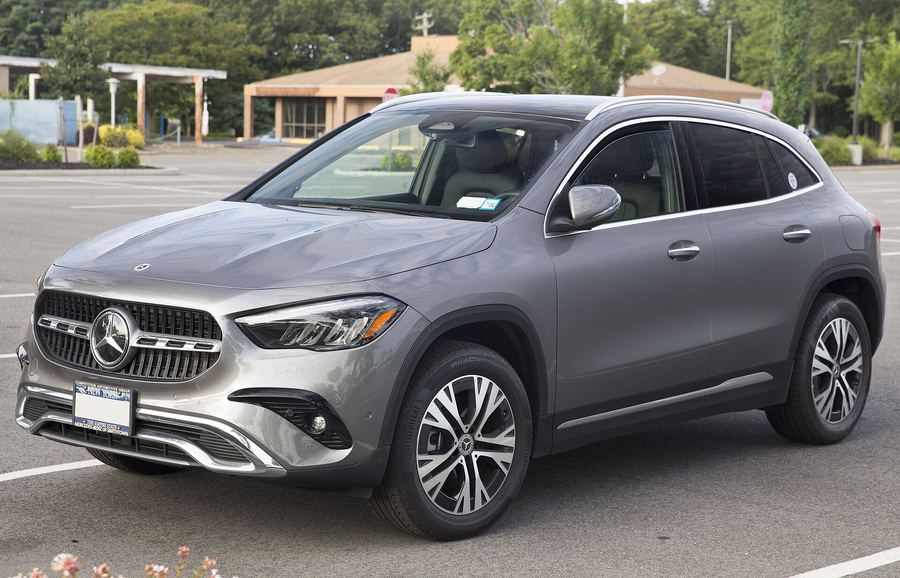
The brand's most affordable and compact SUV — mild-hybrid efficiency, digital-first cockpit. AMG GLA variant available. Entry point into the SUV family.
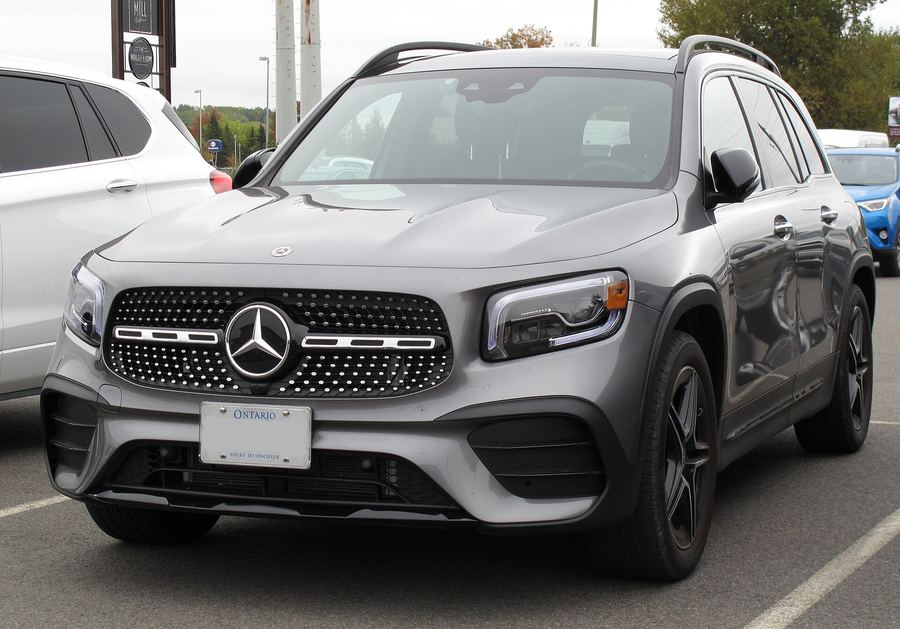
Compact SUV with available 3-row/7-seat configuration — the practicality play in the compact segment. AMG GLB variant available.
Compact / Mid Sedans & SUVs
Coupe-like styling, technology-heavy, sportiest driving feel in the entry lineup. Available as combustion or all-electric (CLA EQ). A CLA Shooting Brake wagon variant joins for 2026.
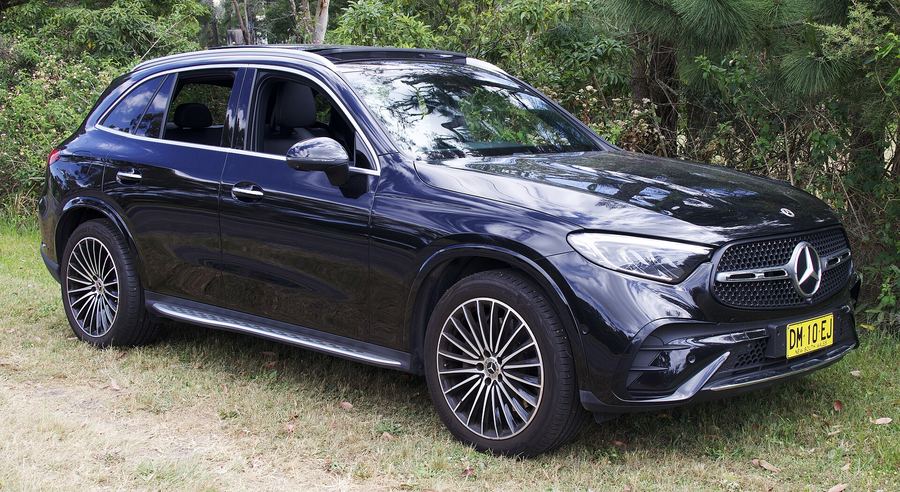
The volume mid-size SUV. Lineup spans the 258-hp GLC 300 mild-hybrid up through the GLC 350e plug-in hybrid (313 hp, ~54 mi EV range), AMG GLC 43 (416 hp), and flagship AMG GLC 63 S E Performance PHEV (671 hp combined). New for 2026: AMG Lite Plus Package.
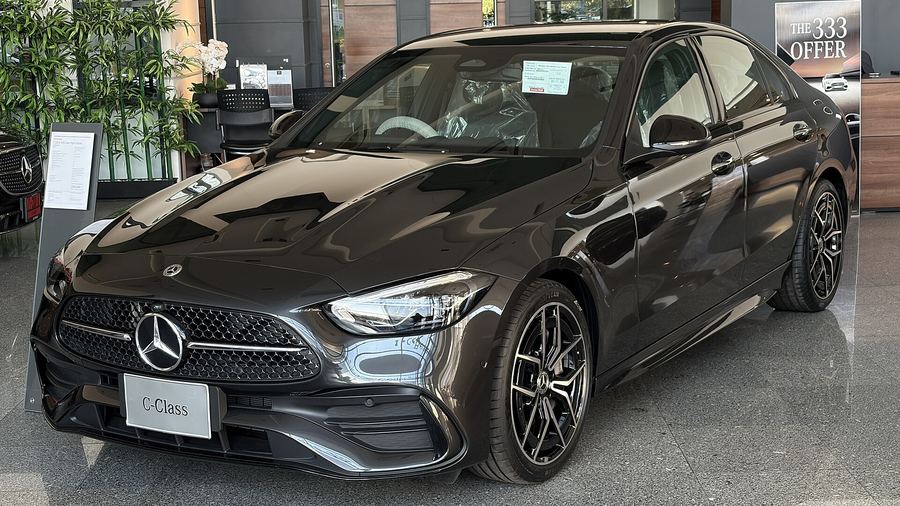
Compact executive sedan — combustion and PHEV powertrains. An all-electric C-Class EQ on the dedicated MB.EA platform arrives in autumn 2026.
Mid-Size Sedans, Wagons & SUVs
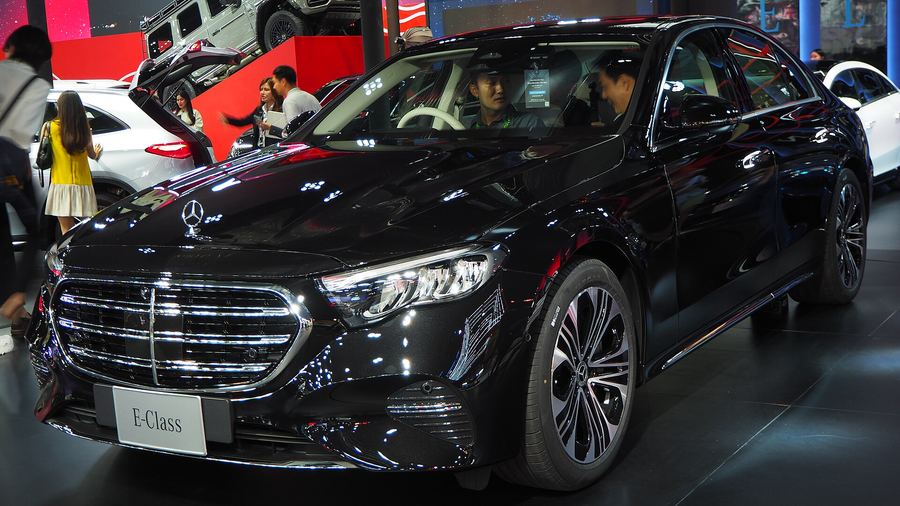
Executive mid-size line with heavy AI-driven routine integration and a whisper-quiet cabin. All-Terrain is the raised, adventure-styled wagon body.
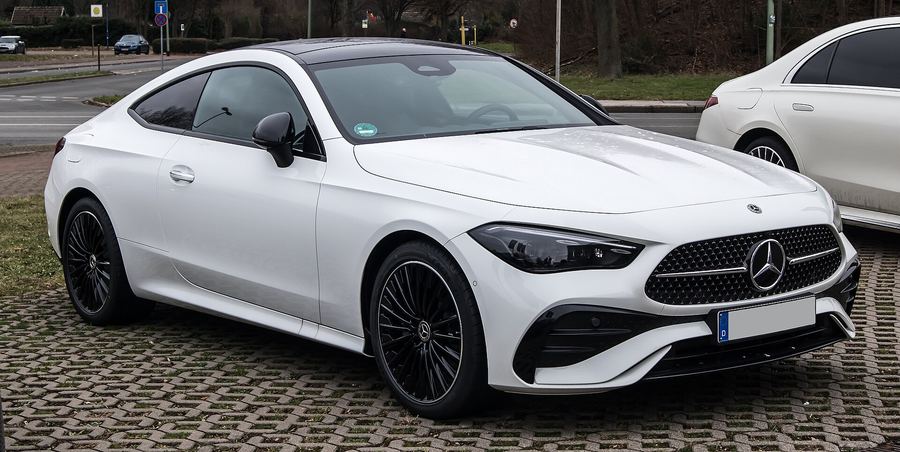
Merges C-Class and E-Class into a single two-door line — long-wheelbase stance, standard 4MATIC AWD, choice of turbo 4- or 6-cylinder. Cabriolet adds AIRSCARF neck-level heating.
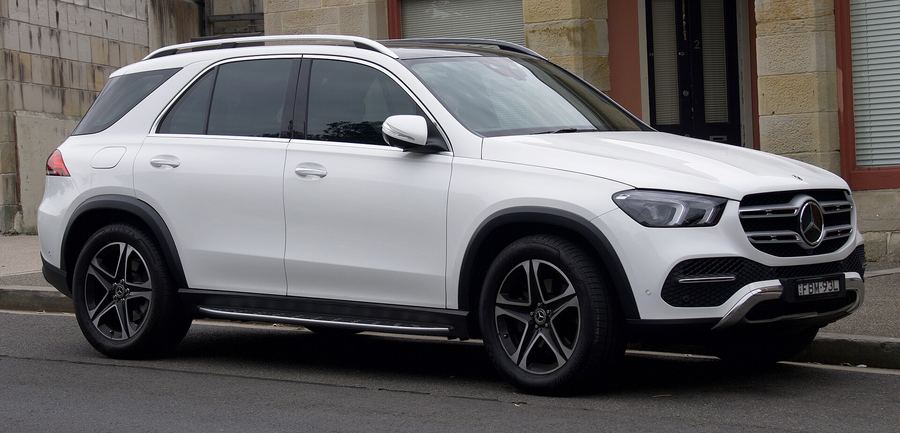
Mid-size luxury SUV, up to 510 hp on top trims, standard AIRMATIC air suspension. GLE facelift (V167) lands in 2026. New MANUFAKTUR Editions for GLE 350 4MATIC and GLE 450 4MATIC.
Full-Size & Flagship
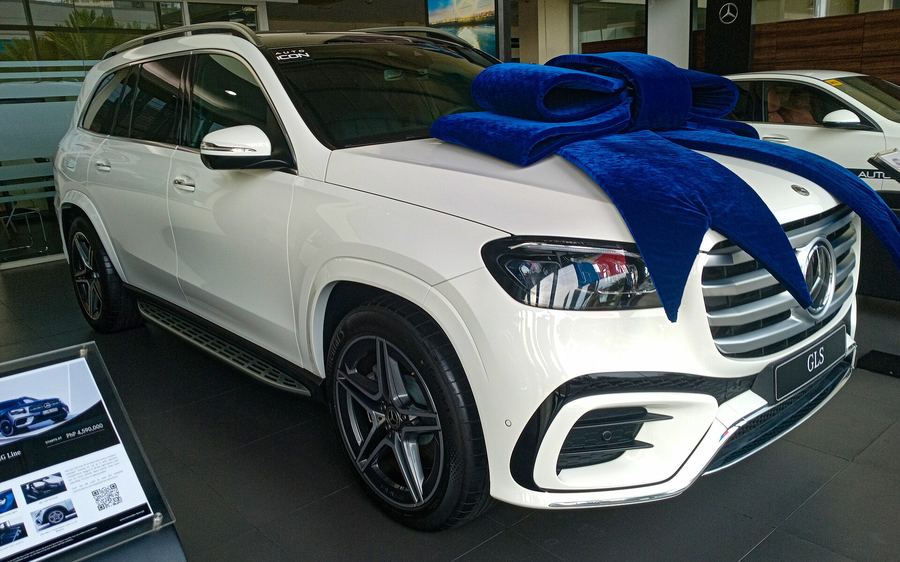
Three-row flagship SUV, seats up to 7, up to 510 hp, standard AIRMATIC + 4MATIC AWD, 84.7 cu ft max cargo. GLS facelift (X167) lands in 2026. New Maybach Night Series exterior package.
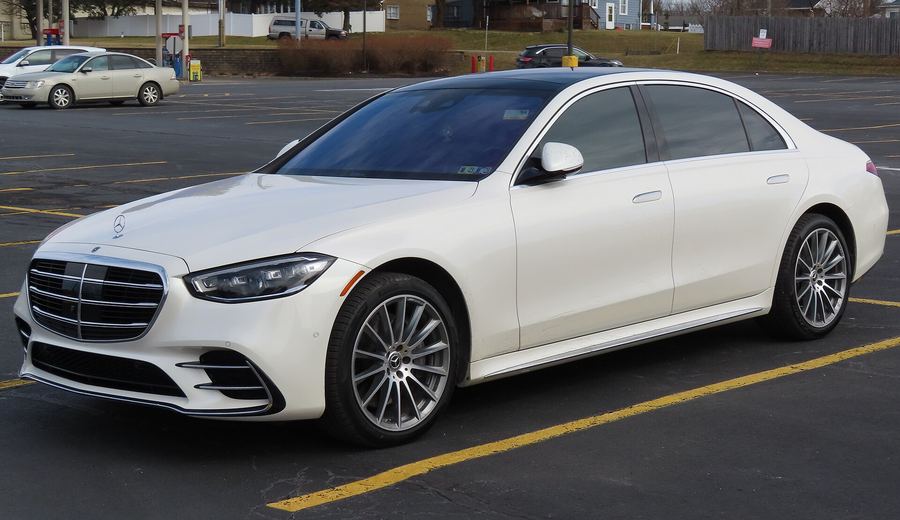
Flagship sedan — receives a 2026 refresh to technology, design, infotainment, and driver-assist systems. Maybach tier adds extensive MANUFAKTUR paint/leather personalization; V12 remains available on Maybach.

Body-on-frame off-roader, brand icon. G580 is the all-electric variant. One of the few models without an AMG-first performance halo needed to justify itself.
Performance & Roadster

Two-seat luxury roadster, AMG-only for this generation.

Flagship performance halo. GT Coupe: standard 2+2 seating, up to 805 hp in E PERFORMANCE hybrid form. An all-new electric AMG GT 4-Door (based on the GT XX concept) joins in 2026 alongside, not replacing, the combustion 4-Door.
All-Electric (EQ) Line
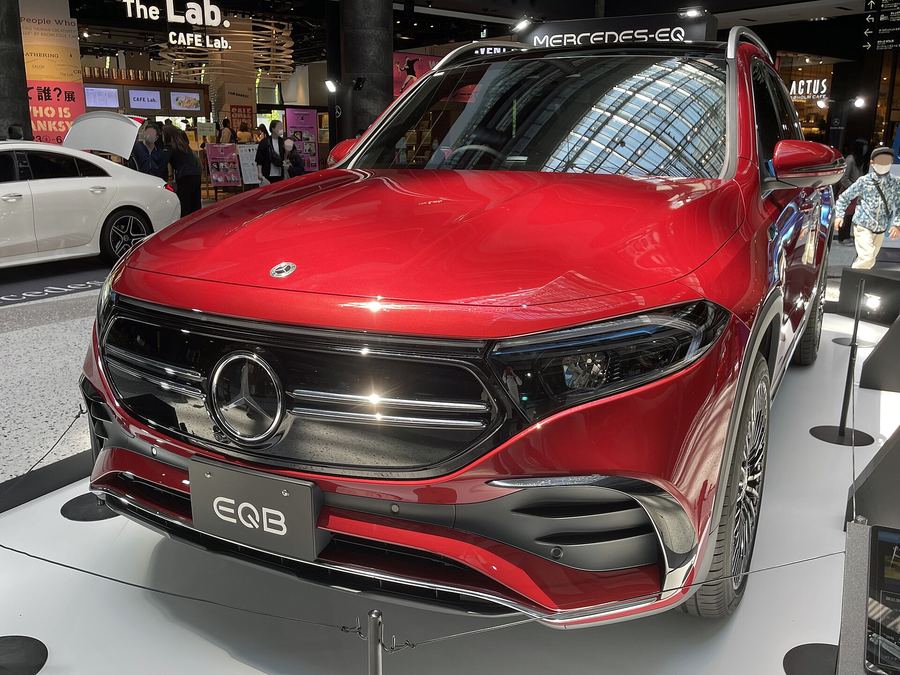
Entry point to the electric SUV range, family-focused compact footprint.

2026 brings the EQE 320+ and EQE 320 4MATIC (315 hp), replacing the prior 350+/350 4MATIC. Standard NACS adapter for Tesla Supercharger access. AMG EQE SUV reaches 617 hp. Upgradeable to the 56-inch MBUX Hyperscreen on any trim.
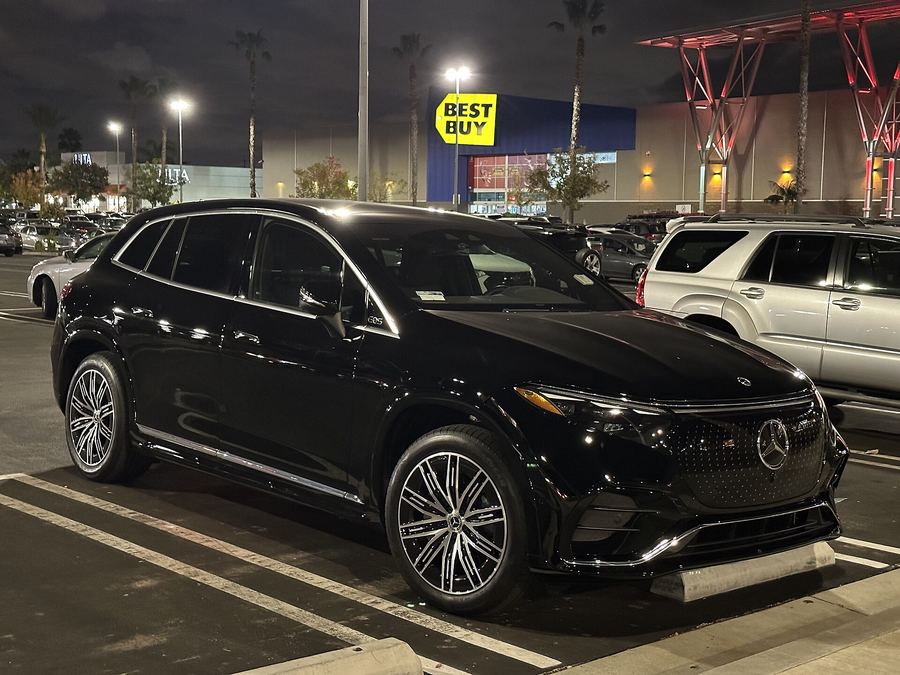
Flagship EV. 2026 EQS SUV makes AWD standard across the entire lineup and adds the NACS adapter. Standard 56-inch MBUX Hyperscreen (three displays), Burmester 3D Surround Sound, AIRMATIC suspension, 10-degree rear-axle steering. New EQS 400 4MATIC / 550 4MATIC sedan variants replace the prior 450/580 4MATIC. A future EQS update brings 800V architecture for faster charging.
All-electric GLC on the new MB.EA platform. Launch variant is the GLC 400 4MATIC (489 PS combined, ~713 km WLTP range on a 94 kWh battery); range expands with a single-motor rear-drive version and a top AMG variant reportedly up to 952 PS.
New-generation van/MPV on the VAN.EA platform, launching as the VLE EQ — large battery targeting 500+ km WLTP range with 800V fast-charging.
The Current Rate Environment (as of July 2026)
National averages — always confirm live rate sheets with your F&I office, since Mercedes-Benz Financial Services runs its own tiered and subvented programs separate from the general market.
| Source | New-Car Avg APR | Used-Car Avg APR |
|---|---|---|
| Bankrate (60-mo new car survey) | 6.96% | — |
| Experian (Q1 2026, State of Automotive Finance) | 6.39% | 11.43% |
| Edmunds (May 2026) | 6.9% | 10.4% |
| Cox Automotive / Dealertrack (May 2026) | 9.87% | 12.29% |
| LendingTree marketplace range | 6.81%–23.82% | — |
Rates have been gradually declining since mid-2024, after climbing from 3.85% (Dec 2021) to 7.89% (July 2024). Experian's Q4 2025 data put "super prime" (highest-tier) borrowers at an average 4.66% APR, versus 16.01% for "deep subprime" — that spread is the entire credit-tier story in two numbers.
Credit Tiers, Buy Rate, and Dealer Reserve
| Tier | Typical Score Range | Positioning |
|---|---|---|
| Super Prime | 781+ | Lowest rates, first in line for 0%/low-APR factory-subvented offers |
| Prime | 661–780 | Eligible for most factory incentives, below-average rates |
| Non-Prime / Near-Prime | ~601–660 | Largest share of combined new+used loans of any tier; approaching the prime cutoff |
| Subprime | ~501–600 | Higher rates, more limited lender approval |
| Deep Subprime | Below 501 | Highest rates, narrowest lender pool, often specialty finance companies |
How dealer reserve works
When a deal is submitted to a lender, the lender returns a buy rate — the actual rate they're willing to fund based on the customer's credit, income, and the vehicle. The dealer is not required to pass that rate through. Instead, F&I can add a markup — commonly 1–2.5 percentage points, regulatorily capped in that range — and quote the marked-up sell rate to the customer. The spread between buy and sell is dealer reserve, kept as profit. On a $30,000, 72-month loan with a 2% markup, that's roughly $1,800–$2,000 in reserve on a single deal.
Mercedes-Benz Financial Services (MBFS) Programs
MBFS is the captive lender — it sets residuals, base money factors, and runs the subvented rate/lease programs that make Mercedes competitive against APR-driven competitors.
How current programs are typically structured
- Tiered APR financing by term length — e.g., a recent structure ran roughly 1.99% for 24–36 months, 2.99% for 37–48, 3.99% for 49–60, and 4.99% for 61–72 months on eligible models, with G-Class and GLS often carrying their own separate (and sometimes more aggressive) tiers.
- Model-year-specific offers — MY25 (prior model year) inventory frequently carries more aggressive APR and lease cash than current MY26 stock, since MBFS is incentivizing move-through before the new model year fully takes over.
- Loyalty & Conquest credits — loyalty credits for existing Mercedes owners/lessees typically range from roughly $1,000 (EQB) up to $20,000 (Maybach); conquest credits reward customers switching from another brand, usually in the low thousands depending on model.
- 39-month lease structuring — a common MBFS technique uses the 36-month residual value but stretches the term to 39 months, giving the customer three extra months of use at the same residual — which lowers the effective monthly payment without changing how the vehicle actually depreciates.
- One-pay leases — available across the standard MBFS lease program; the lump-sum payment is based on the discounted present value, so effective money factors run lower than monthly-pay leases. GAP is still included.
Illustrative real money factors & residuals (GLE line, pulled from active customer-forum quotes)
| Model | Term/Mileage | Money Factor | Residual | Notes |
|---|---|---|---|---|
| GLE 580 | 36mo / 7,500mi | Standard | 57% | — |
| GLE 450e | 24mo / 7,500mi | .00138 | 63% | $7,500 lease credit active |
| GLE 450 4MATIC | 36mo / 12,000mi | .00182 | 58% | — |
| GLE 53 | 36mo / 10,000mi | — | 55% | — |
Figures above are point-in-time examples pulled from active deal discussions and will not reflect this month's program — always pull the current rate sheet from MBFS/DMS before quoting.
What the F&I Department Actually Does
F&I — Finance and Insurance — is the back-end profit center of the dealership and the final stop before delivery. Every deal that isn't paid in cash flows through this office.
- Structures financing — submits the credit application to lenders (captive and outside banks/credit unions), manages buy-rate-to-sell-rate spread, and presents payment options.
- Presents protection products — vehicle service contracts, GAP, tire/wheel, prepaid maintenance, and more, typically through a tiered "menu" presentation.
- Handles compliance and paperwork — ensures required disclosures, fair-lending compliance, and contract accuracy before a deal is funded.
- Manages lender relationships — knows which lenders to submit which credit profiles to, and negotiates buy rates across the credit spectrum.
Even when front-end (vehicle sale) margins compress, F&I often holds up total dealership profitability — finance reserve, service contracts, and ancillary products commonly represent 30–40% of total gross profit per vehicle.
F&I Product Glossary
Commonly called an "extended warranty," though technically distinct — a contractual agreement to cover specified future repairs. The single highest-margin F&I product; dealer cost typically 40–60% of retail price, commission rates around 30–50%.
Covers the difference between a totaled/stolen vehicle's insurance payout and the remaining loan or lease balance. Built into most MBFS leases via the acquisition fee; sold separately on retail loans, commonly $500–$1,000 at the dealer (vs. $20–$50/yr through many auto insurers).
Covers repair/replacement costs from road hazard damage. Ask whether cosmetic rim damage is included — coverage varies.
Customer pays upfront (often financed into the deal) for scheduled maintenance — oil changes, inspections — at a locked-in price.
Covers the cost of replacing lost/stolen key fobs — increasingly relevant given the cost of modern keyless-entry technology.
Ranges from simple VIN glass etching to OBD-port trackers and hardwired anti-theft systems, sometimes subscription-based.
Coating applied to paint, seats, or carpet. Often installed pre-sale on inventory — negotiable even though it may appear as an existing line item.
Reduces out-of-pocket cost for windshield repair/replacement — a stronger value case for customers doing highway or rural driving.
Covers cosmetic paintless dent repair — most relevant for customers parking in dense urban or shared-lot environments.
Several products (e.g., VSC + tire/wheel + prepaid maintenance) packaged at a discount versus buying each individually — common menu-selling structure.
The Profit Metrics F&I (and Management) Watch
Average gross profit generated per vehicle sold — the north-star profitability metric across front-end and back-end combined.
The % of deals that include a given F&I product. GAP penetration often runs 60–70% (simple value story); VSC penetration is typically lower given higher price point.
The ratio of financed/leased deals to cash deals. Cash deals generate zero reserve — finance penetration is directly tied to F&I profitability.
Time between deal completion and lender funding. Faster CIT improves cash flow and reduces deal-falling-through risk.
Revenue clawed back when a loan is paid off early or a product is canceled — a key reason F&I cares about deal durability, not just deal volume.
Your Sales Process
The floor process you run, structured into stages — with what each stage is actually accomplishing underneath the surface.
Warm, unhurried welcome. First 30 seconds set the tone for the entire visit — genuine over scripted. This is also when you're already reading them: energy level, who's leading the conversation, body language between any companions.
Open-ended questions, not an interrogation. You're uncovering the pain point that brought them in today, who the vehicle is really for, and what "hot buttons" you can build the presentation around. Hold off on trade-in, credit, financing, and price questions here — asking too early puts customers on the defensive before you've earned the right to ask.
Match the vehicle to what you uncovered in discovery. Lead the walkaround with whatever feature they mentioned first or cared about most — that's the anchor point. Full exterior and interior walkaround, paint the ownership picture, not just a features list.
Let them experience it, not just look at it. This is where "wanting it" becomes "needing it" — the emotional close happens here more than anywhere else in the process.
Once they're sold on the vehicle and agree to "see the numbers," this is the handoff point. Your job here is gathering complete, accurate intake information — see the Discovery Checklist and Credit App sections below — so the desk and F&I can work efficiently once you hand off.
This is manager/F&I territory — not yours to negotiate. Your role at this stage is staying present, keeping the customer comfortable, and reinforcing the value decision they already made, not re-litigating price.
Feature walkthrough, paperwork close, and the moment that sets up your review and referral pipeline. A rushed delivery undoes a lot of the trust built earlier — don't shortcut this.
Discovery & Intake Checklist
Everything worth knowing before or as you sit down at the desk — organized by category. You won't ask all of this as a checklist out loud; work it into natural conversation during discovery and let the rest surface as you build the deal.
- Who is the primary driver? (Ask directly — "who's getting the new car?")
- What are they driving now, and why are they replacing it?
- What's the real pain point — reliability, lease-end, growing family, status/career milestone, an event?
- Any secondary drivers (spouse, teen, business use)?
- Timeline — shopping today, or researching for later?
- New, used, or Certified Pre-Owned?
- Finance or lease preference (or undecided — walk them through both)?
- Body style / size — sedan, SUV, coupe, how many passengers regularly?
- Primary use — commuting, family hauling, business/client-facing, weekend/performance?
- Must-have features mentioned unprompted (these are your walkaround anchor points)
- Any prior Mercedes-Benz ownership (loyalty credit eligibility)?
- Target monthly payment range — and note how they say it, hesitation or confidence tells you a lot about flexibility
- Down payment amount available
- Trade-in vehicle? Year/make/model, payoff status if financed/leased
- Approximate credit score self-assessment (not gospel, but useful context)
- Any known credit history concerns worth flagging before it surfaces on the pull
- Co-signer or co-applicant likely?
- Occupation / business ownership — shapes both vehicle fit and which trim tier is realistic
- Household — kids, commute pattern, other vehicles in the household
- Anything mentioned about upcoming life changes (relocation, new job, expanding family) that affects vehicle needs
Credit App / Desk Log — Required Fields
The standard field set every dealership credit application (and VinSolutions-style desk log) needs to run credit and structure a deal. Get this complete and accurate at the desk so nothing stalls the deal downstream.
Applicant Information
- Full legal name, date of birth, SSN
- Driver's license number and state
- Current address, and how long at that address (many lenders want 2 years of residence history — if under 2 years, get the prior address too)
- Housing status — own, rent, or other — and monthly housing payment amount
- Phone number and email
Employment & Income
- Current employer, position/title, and length of employment
- Gross monthly or annual income
- If self-employed or business owner: business name, structure, and how income will be verified (tax returns, bank statements)
- Prior employer if current tenure is under 2 years
Co-Applicant (if applicable)
- Same full field set as above — name through income — for any co-signer or joint applicant
- Relationship to primary applicant
- Whether both incomes are relied upon to meet monthly obligations (relevant context for the deal structure, not just a formality)
Deal-Specific
- Vehicle of interest — new/used/CPO, year, make, model, stock number
- Trade-in details — year/make/model, mileage, condition, payoff amount and lienholder if applicable
- Desired structure — cash, finance, or lease
- Down payment amount
- References (some lenders still request personal references, especially on thinner credit files)
Objection Handling
Common floor objections and how to respond — without touching numbers, which stays with the desk.
Almost never actually about the vehicle — it's usually an unstated concern (price, spouse approval, comparison shopping) hiding behind a polite exit line. Ask directly and warmly: "Totally fair — help me understand what's giving you pause, so I make sure I'm not missing something important." That question alone surfaces the real objection more often than not.
Don't fight it — lean into it. Ask what they're comparing against and why, which tells you exactly what to emphasize (safety, resale, tech, brand cachet, ownership experience). This is a discovery opportunity disguised as a brush-off.
This is a numbers conversation — bring in your manager/F&I rather than negotiating it yourself. Your role is to keep it constructive: "Great question, let's get you with [manager] who can look at exactly what we can do." Don't get defensive about pricing you don't control.
Legitimate, common, and worth respecting — but also worth exploring: "Of course. Is there anything about the vehicle you're not 100% sure about yet, or is it purely a 'let's discuss together' conversation?" If it's the former, you may still have something to address today. If it's genuinely a joint-decision household, offer to have both back together rather than pushing a solo close.
Don't speculate or promise a rate — that's not yours to give. "We work with a range of lenders across every credit tier, so let's get you in front of our finance team and see what they can put together for you." Keep it reassuring without overpromising.
Not your conversation to run (that's F&I), but if it comes up on the floor: acknowledge it's their call, and that F&I will walk through the actual coverage details so they can decide with full information rather than declining sight-unseen.
Answering Customer Questions on the Floor
Common questions customers ask before the numbers conversation, and how to answer them accurately without stepping into F&I/desk territory.
Depends on their driving habits and goals, not a universal right answer. If they drive high mileage, want to build equity, or plan to keep the car long-term — financing usually fits better. If they like a new car every 2–3 years, drive predictable mileage, and want lower monthly payments — leasing usually fits better. Give them the honest framework, let the desk run actual numbers on both.
Rates vary by credit tier and change monthly — that's a finance office question once we run your application, since it depends on your specific credit profile. Don't quote a number from memory; today's actual MBFS rate sheet is what matters, not a general market average.
"Absolutely, that's exactly what my manager will work through with you" — always route pricing conversations to the desk, never negotiate or imply a number yourself.
We'll get you an accurate appraisal once we look at it in person — condition, mileage, and market demand all factor in, so it's not something to estimate off the top of the head.
No — all of that is optional, and F&I will walk you through exactly what each one covers so you can decide what makes sense for you.
Those specials are real but tied to specific credit tiers, terms, and sometimes specific trims/model years — accurate eligibility comes from actually running the application, not a guess on the floor.
There are real options — trading the equity into a new vehicle, a lease pull-ahead program if MBFS is running one, or a straight buyout — and it depends on their specific lease terms and the car's current value, so that's worth a real conversation with the desk rather than a generic answer.
Quick-Reference Glossary
| Term | Plain Definition |
|---|---|
| MSRP | Manufacturer's Suggested Retail Price — the sticker price; the starting point for negotiation, not the final number. |
| Cap Cost | The negotiated price a lease is based on — the lease equivalent of "selling price." |
| Residual Value | Projected vehicle value at lease-end, fixed by the captive lender. |
| Money Factor | Lease interest rate expressed as a small decimal; ×2,400 to get approximate APR. |
| APR | Annual Percentage Rate — total borrowing cost including interest and fees, expressed yearly. |
| Buy Rate | The actual rate a lender is willing to fund, before any dealer markup. |
| Sell Rate | The rate quoted to the customer — buy rate plus dealer reserve markup. |
| Dealer Reserve | Dealer profit from the spread between buy rate and sell rate. |
| GAP | Guaranteed Asset Protection — covers the loan/lease balance an insurance payout doesn't cover after a total loss. |
| VSC | Vehicle Service Contract — the formal term for what's commonly called an "extended warranty." |
| Acquisition Fee | Lender fee at lease inception, covers setup and built-in GAP. |
| Disposition Fee | Lender fee charged at lease-end if the vehicle is returned rather than bought or rolled into a new deal. |
| MSD | Multiple Security Deposits — refundable upfront deposits that buy down the money factor. |
| PVR | Per Vehicle Retail — average gross profit per unit sold. |
| MBFS | Mercedes-Benz Financial Services — the captive lender for Mercedes-Benz leases and loans. |